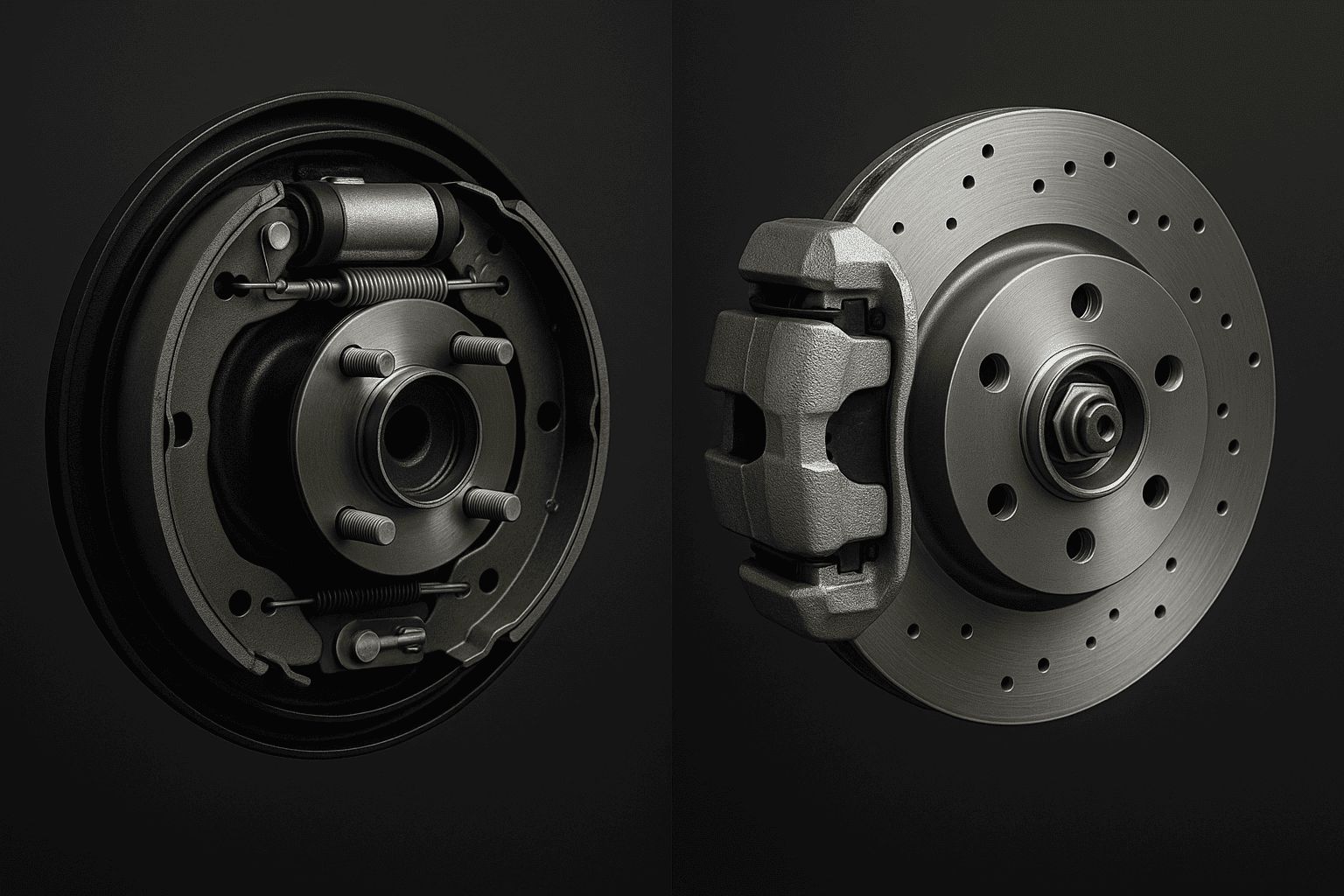
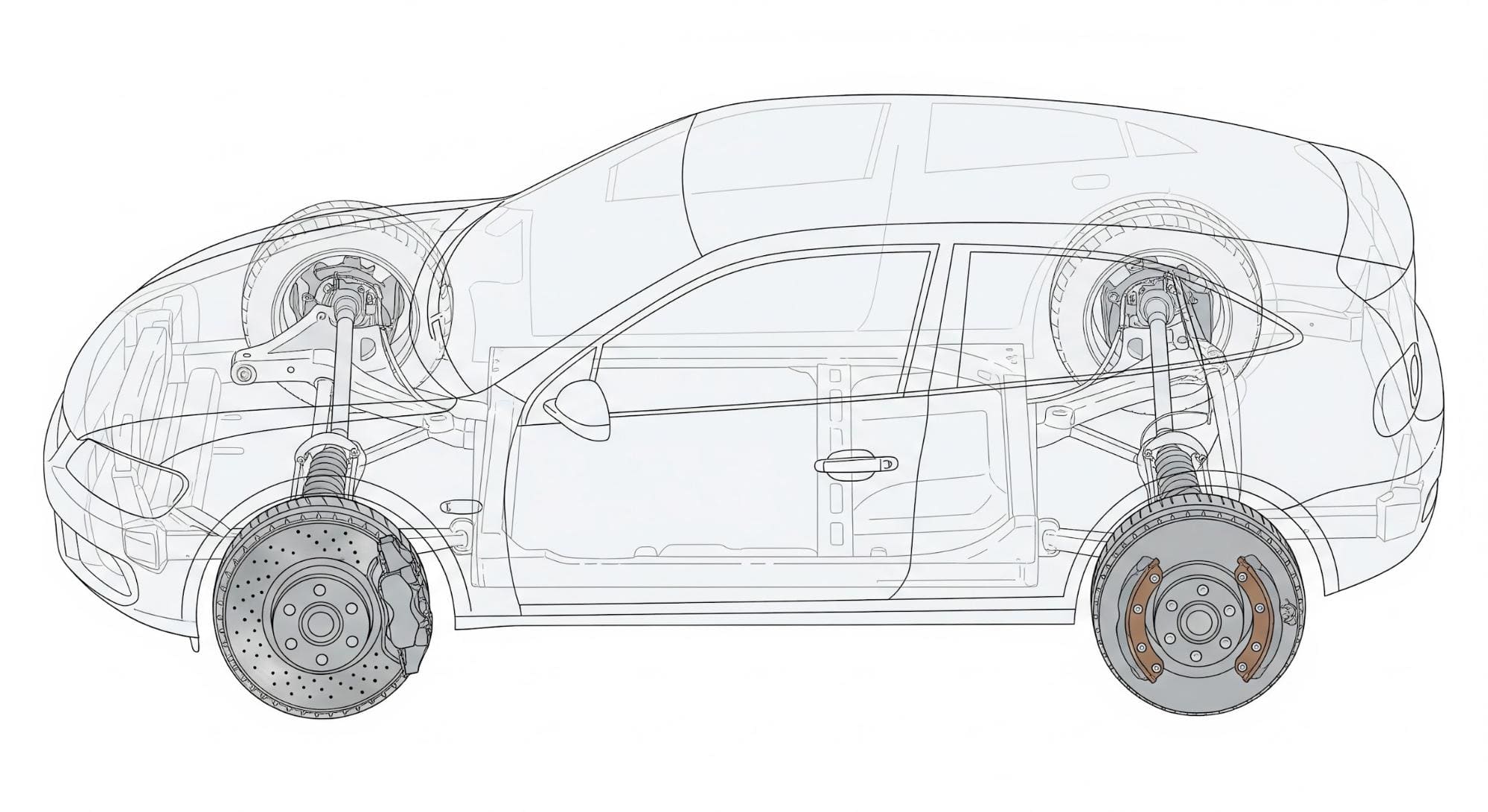
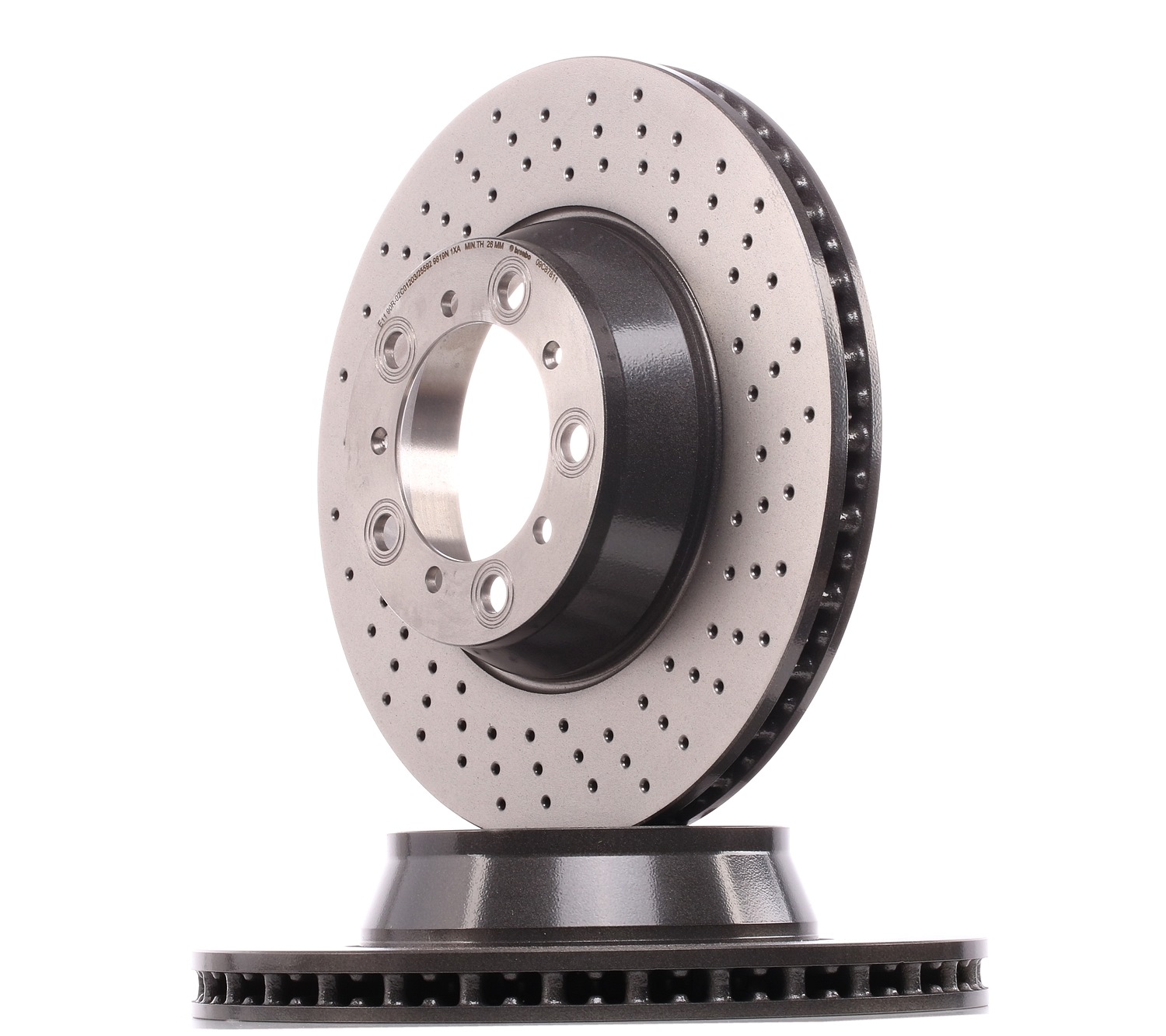
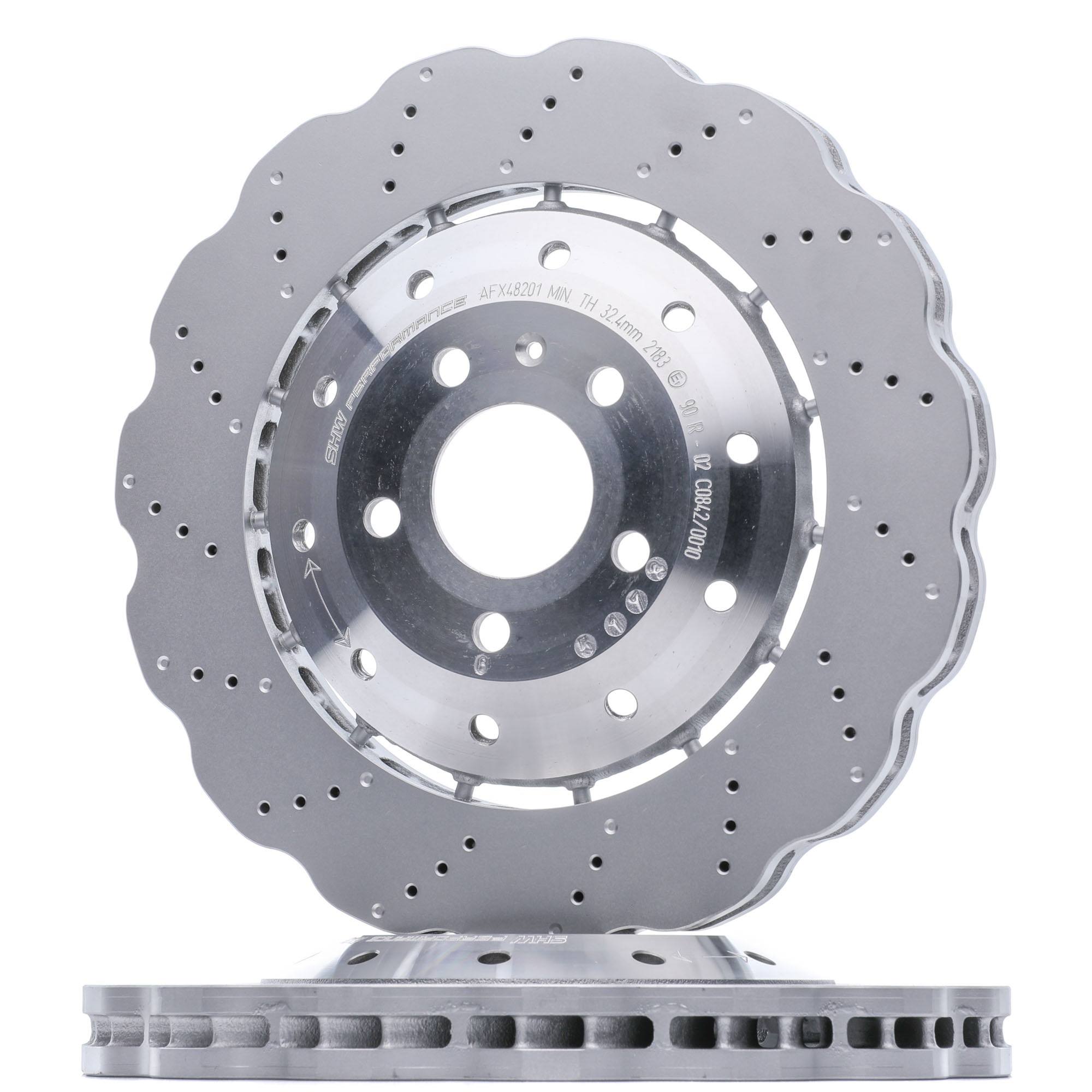
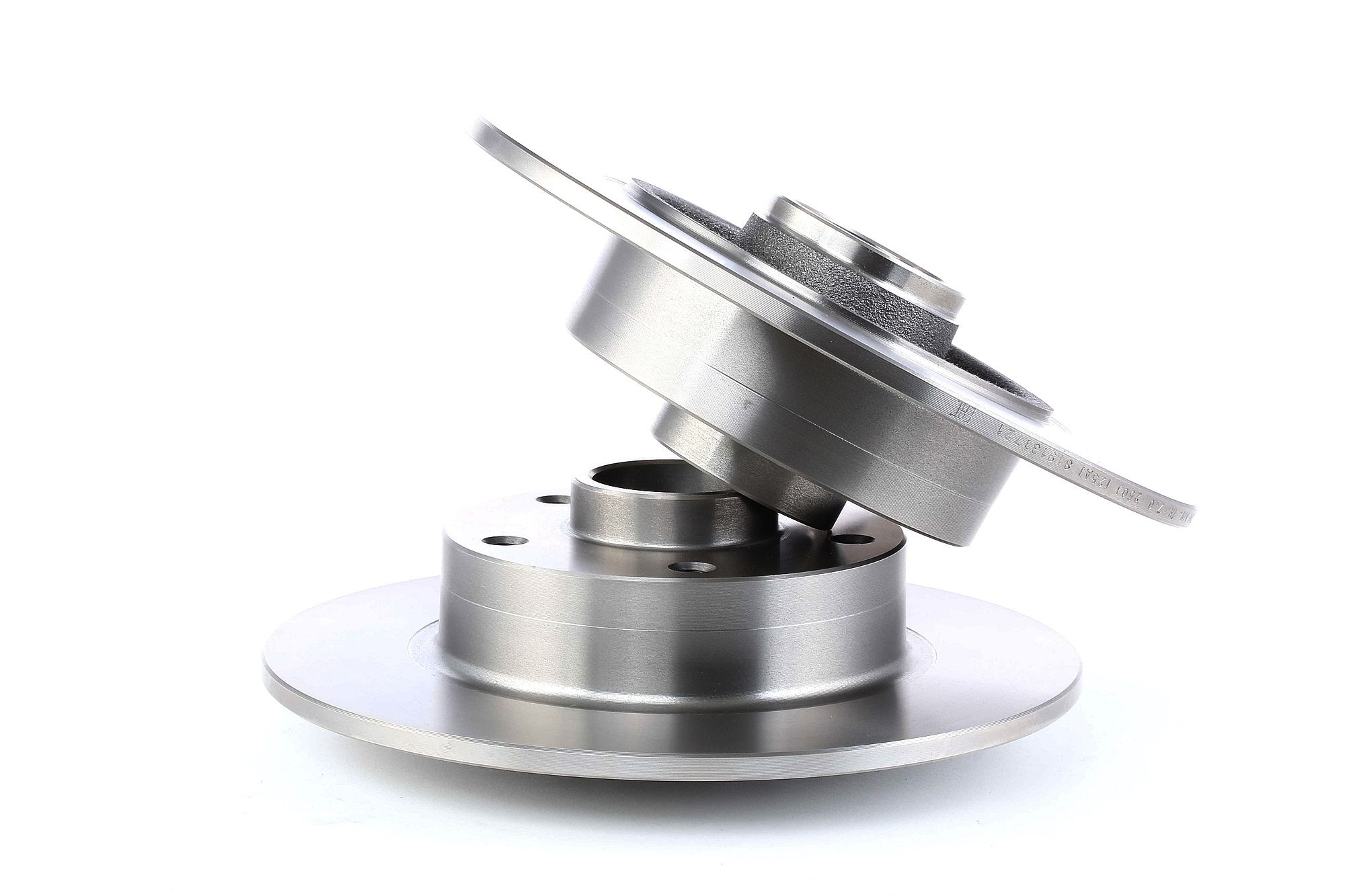
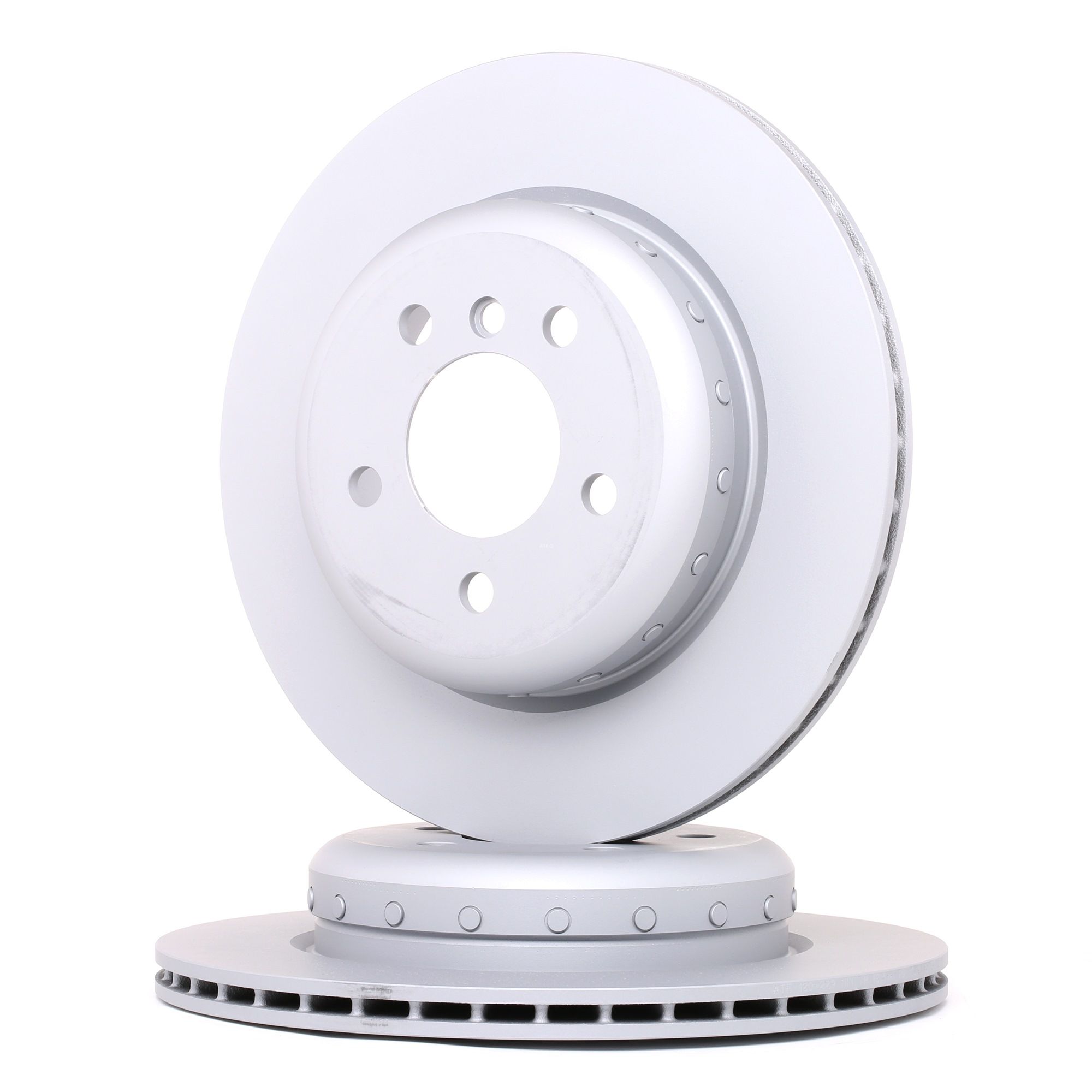
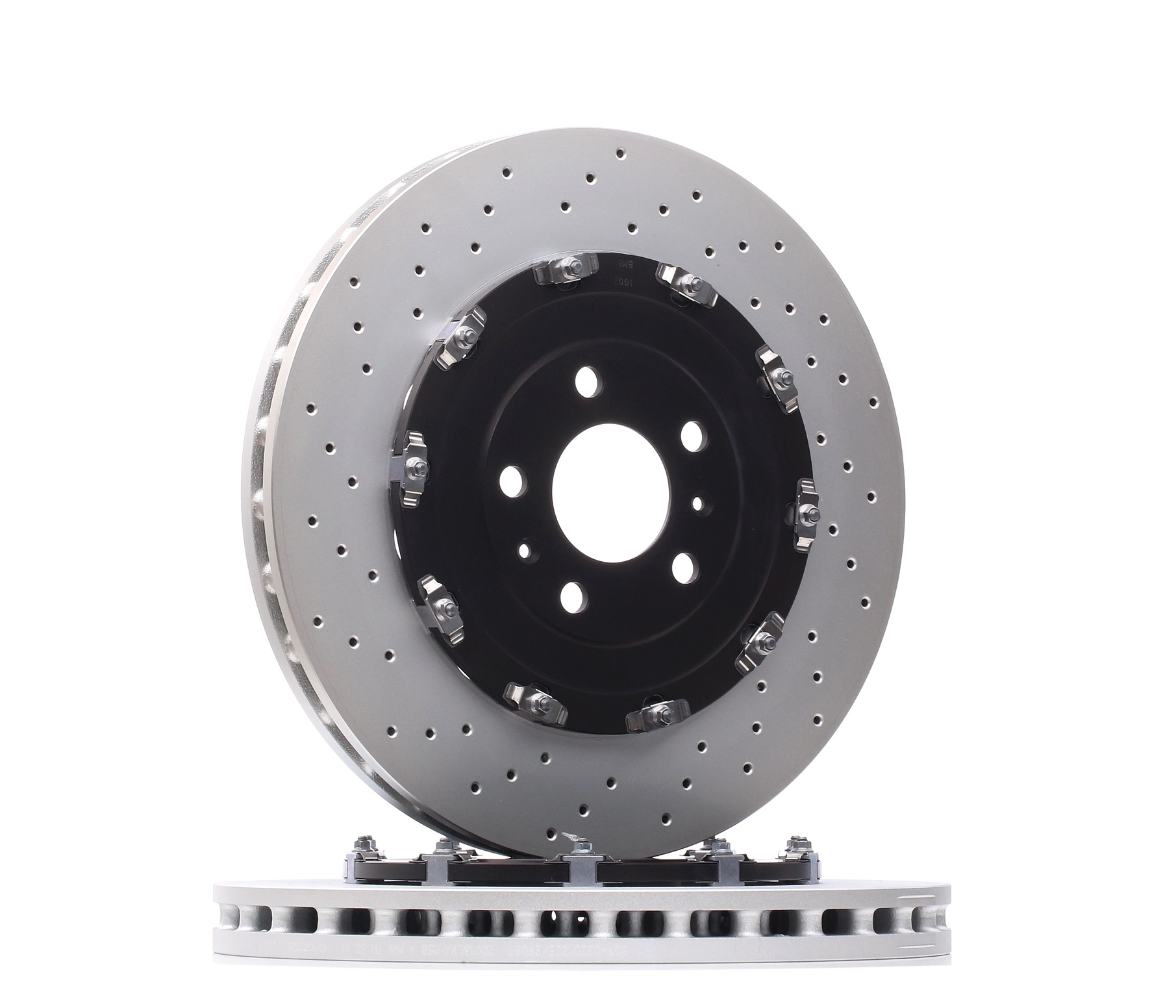
First of all, let’s look at the similarities between the two. They both operate on the same basic principle: the brakes slow the car wheels down by turning kinetic energy into heat through friction. The key difference lies in how the components create friction and their braking efficiency.
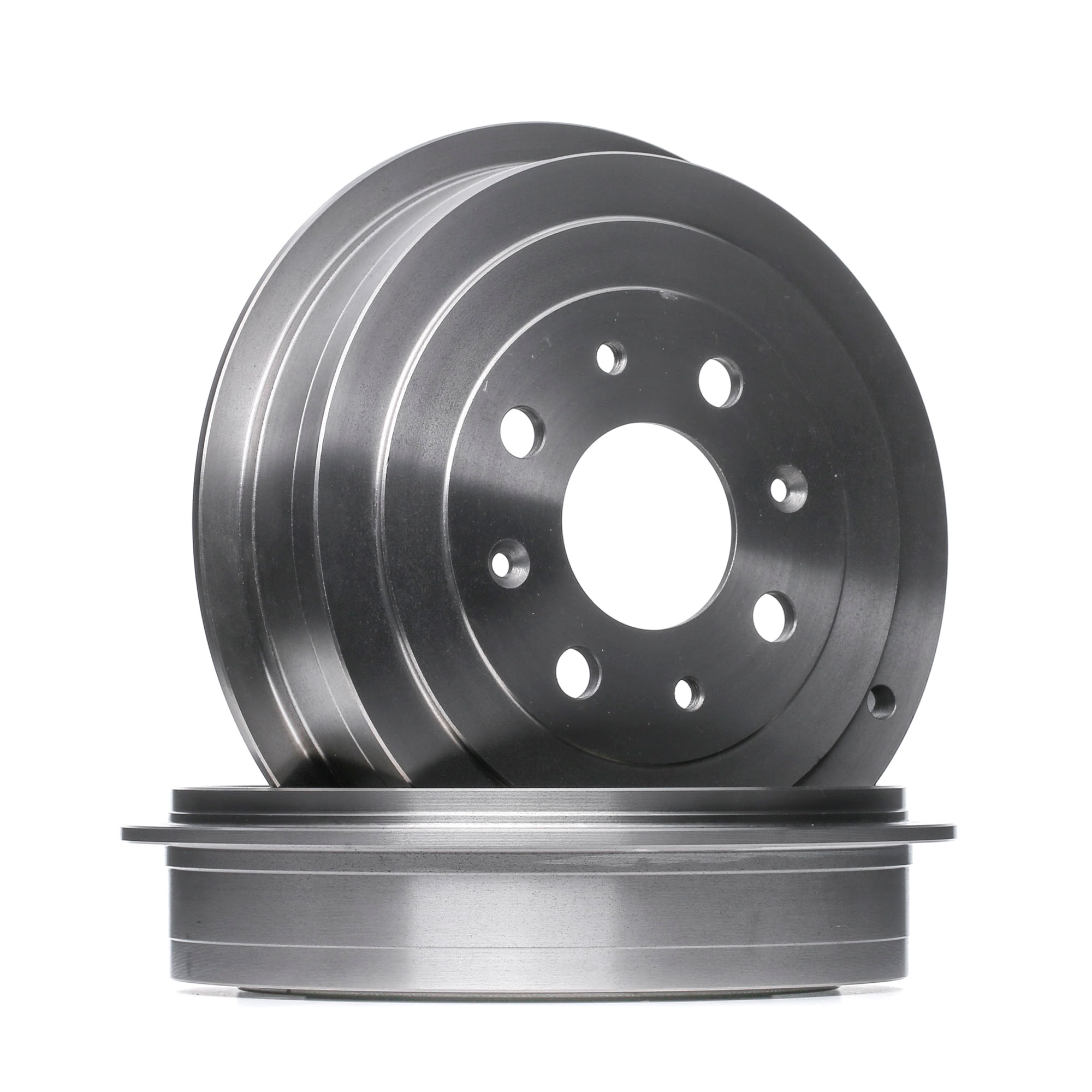
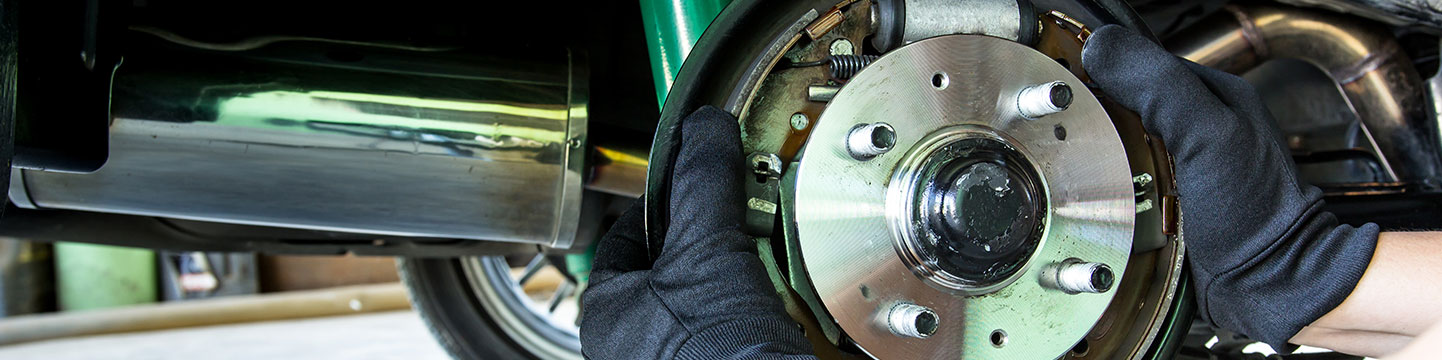
The first drum brakes were patented in 1902 by French automotive pioneer Louis Renault. They laid the foundations for today’s modern braking systems and were the main type of brake for cars until disc brakes were popularised in the mid 1950s. In a modern car front and rear drum brake components are as follows (though drum brakes are generally only used on the rear axle): hydraulic wheel cylinders, brake shoes, springs, and the brake drum. When you press the brake pedal, two brake shoes are pushed against the inner surface of the rotating drum by the wheel cylinders, slowing the vehicle’s momentum. Once the brakes are released, the retracting springs draw the shoes away from the drum.
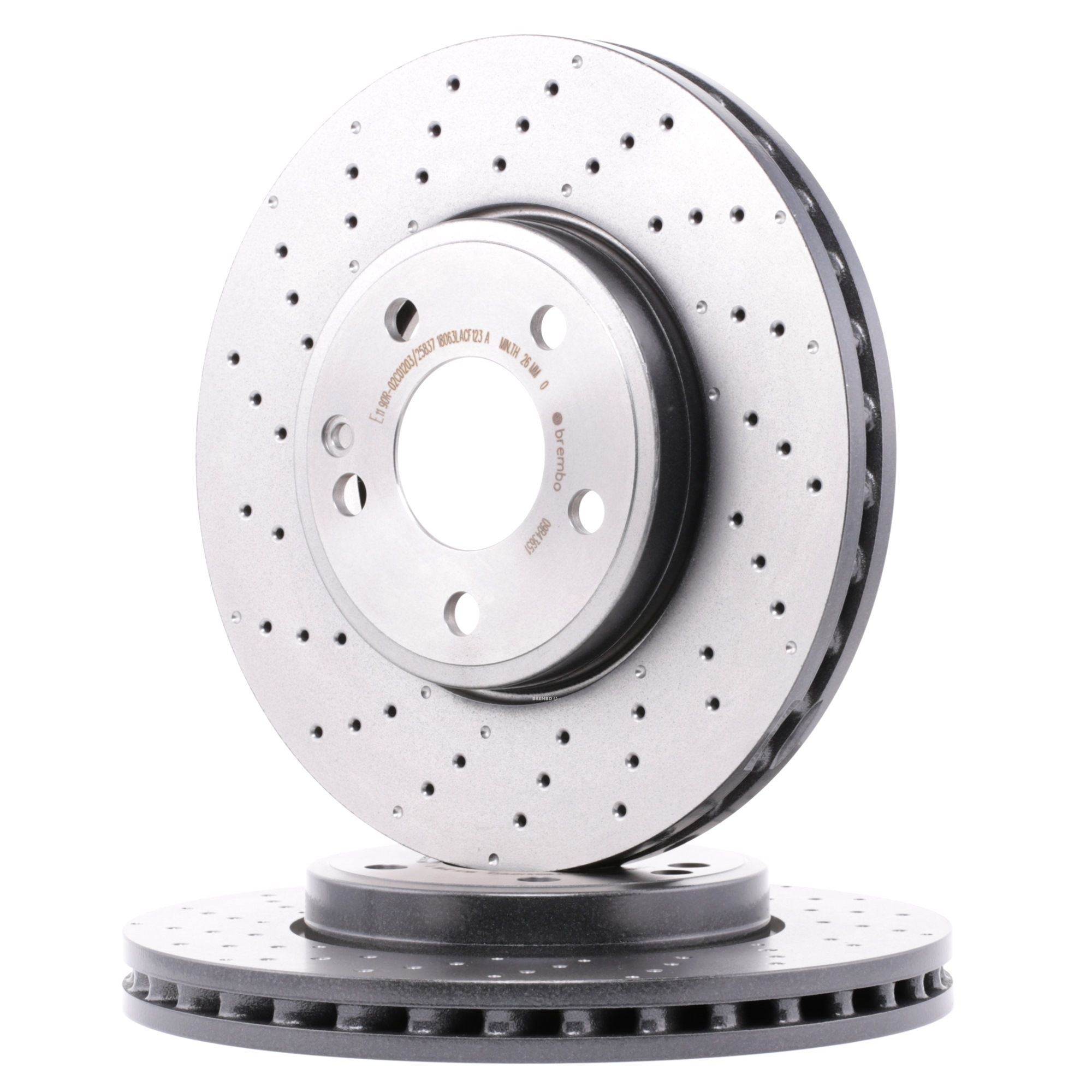
Reviews - 58
Parts Details
Diameter [mm]: 295
Brake Disc Type: perforated / vented
Drilled:
yes
Surface: Coated
Machining:
High-carbon
Supplementary Article / Supplementary Info Info 2: with bolts / screws
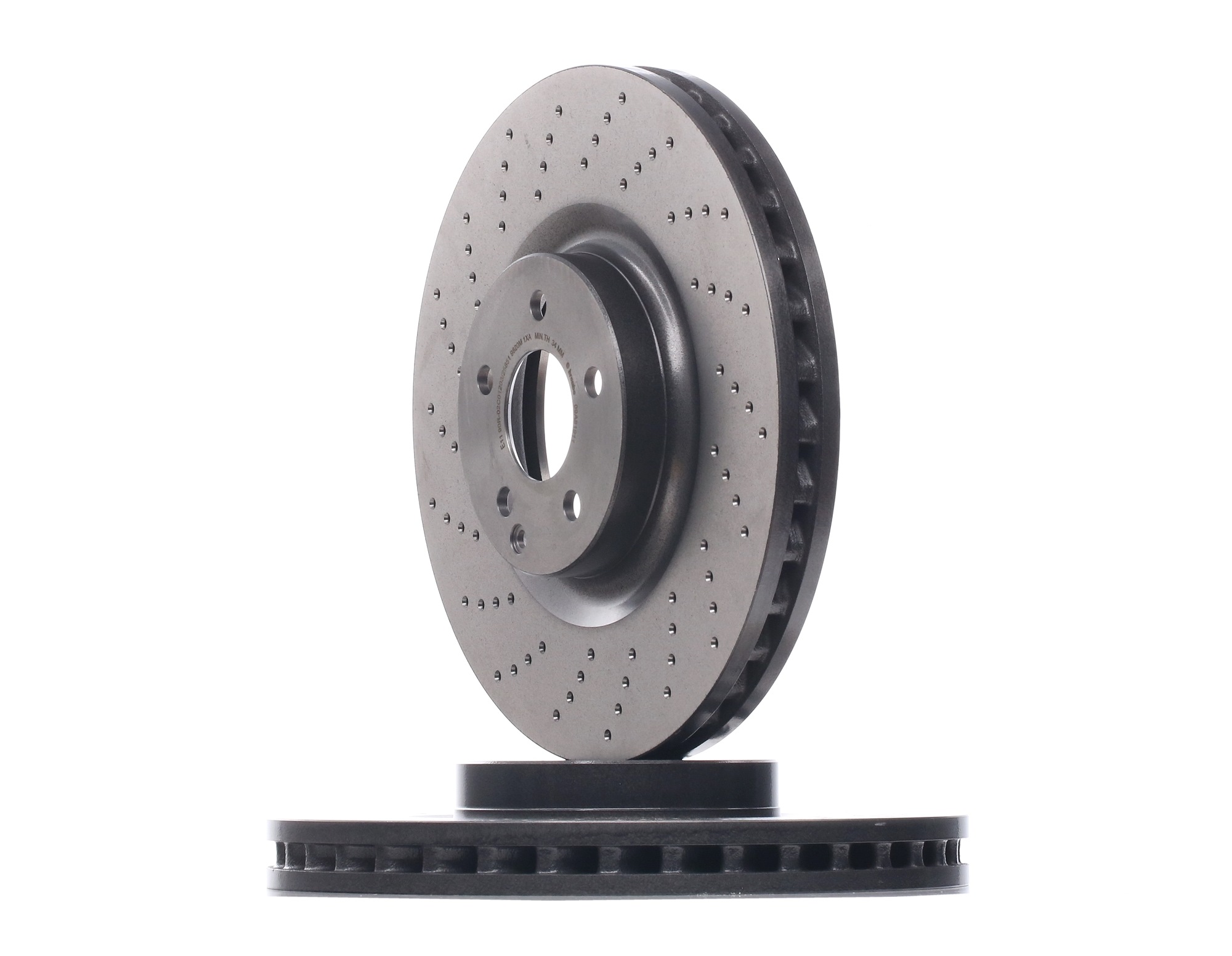
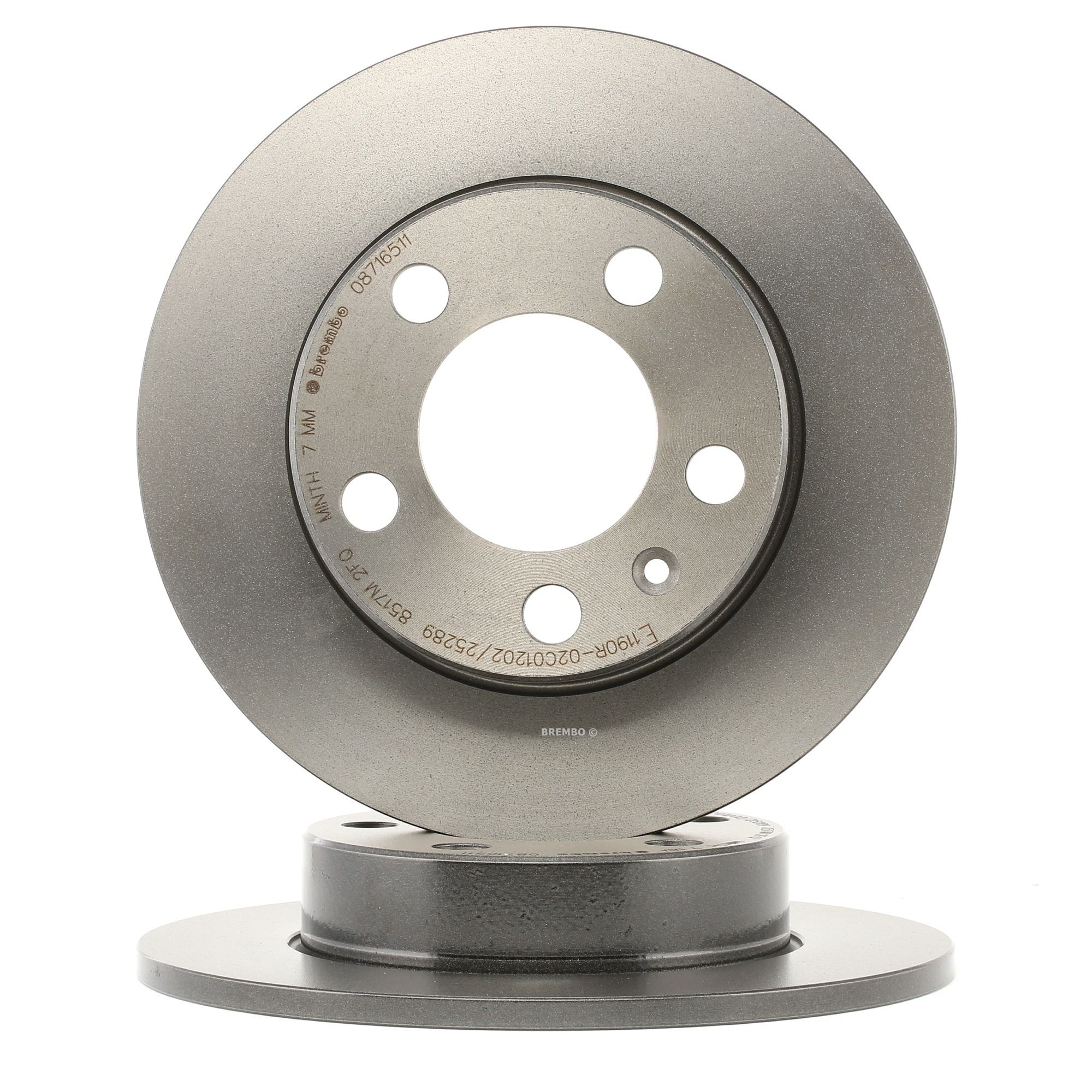
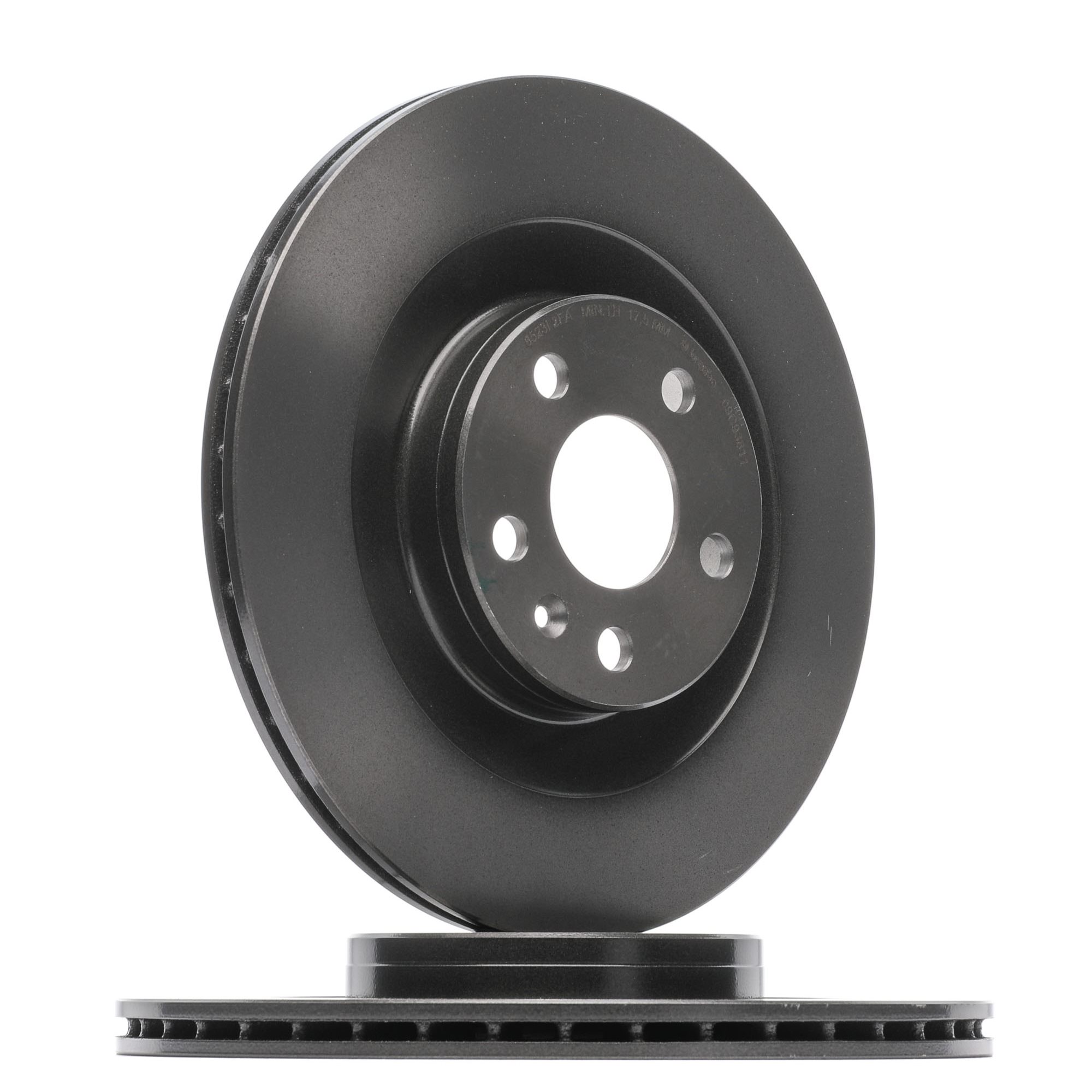
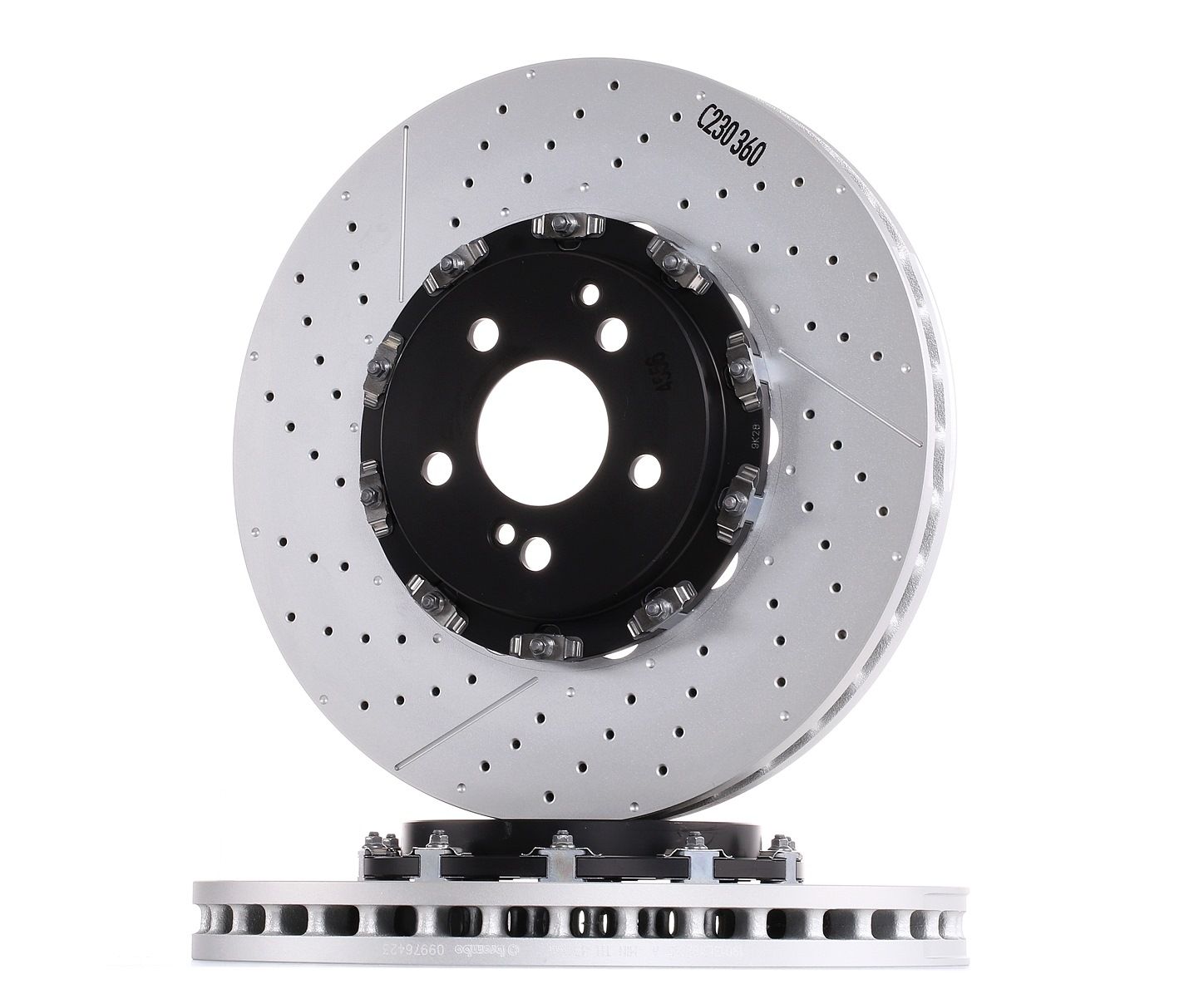
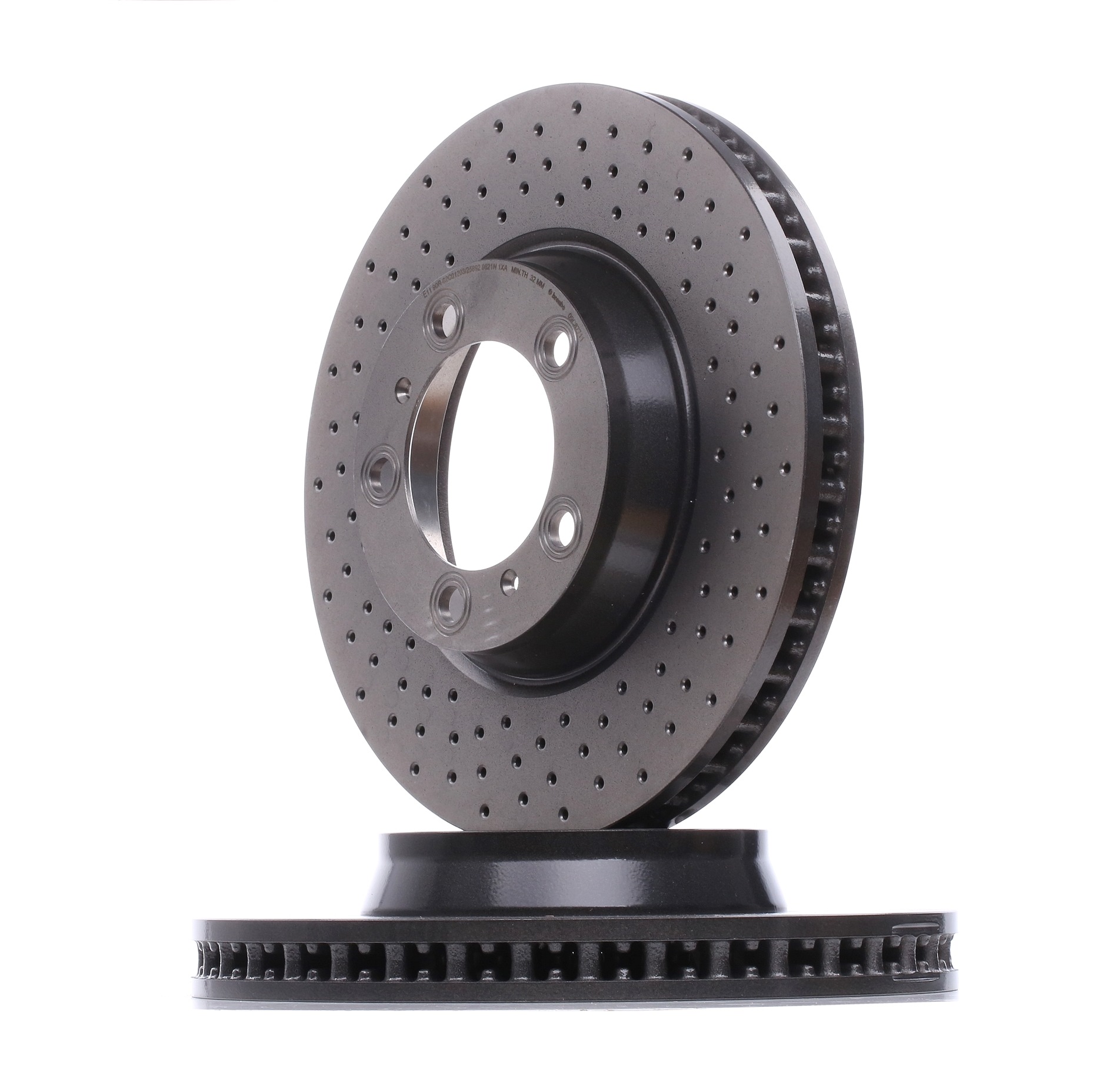
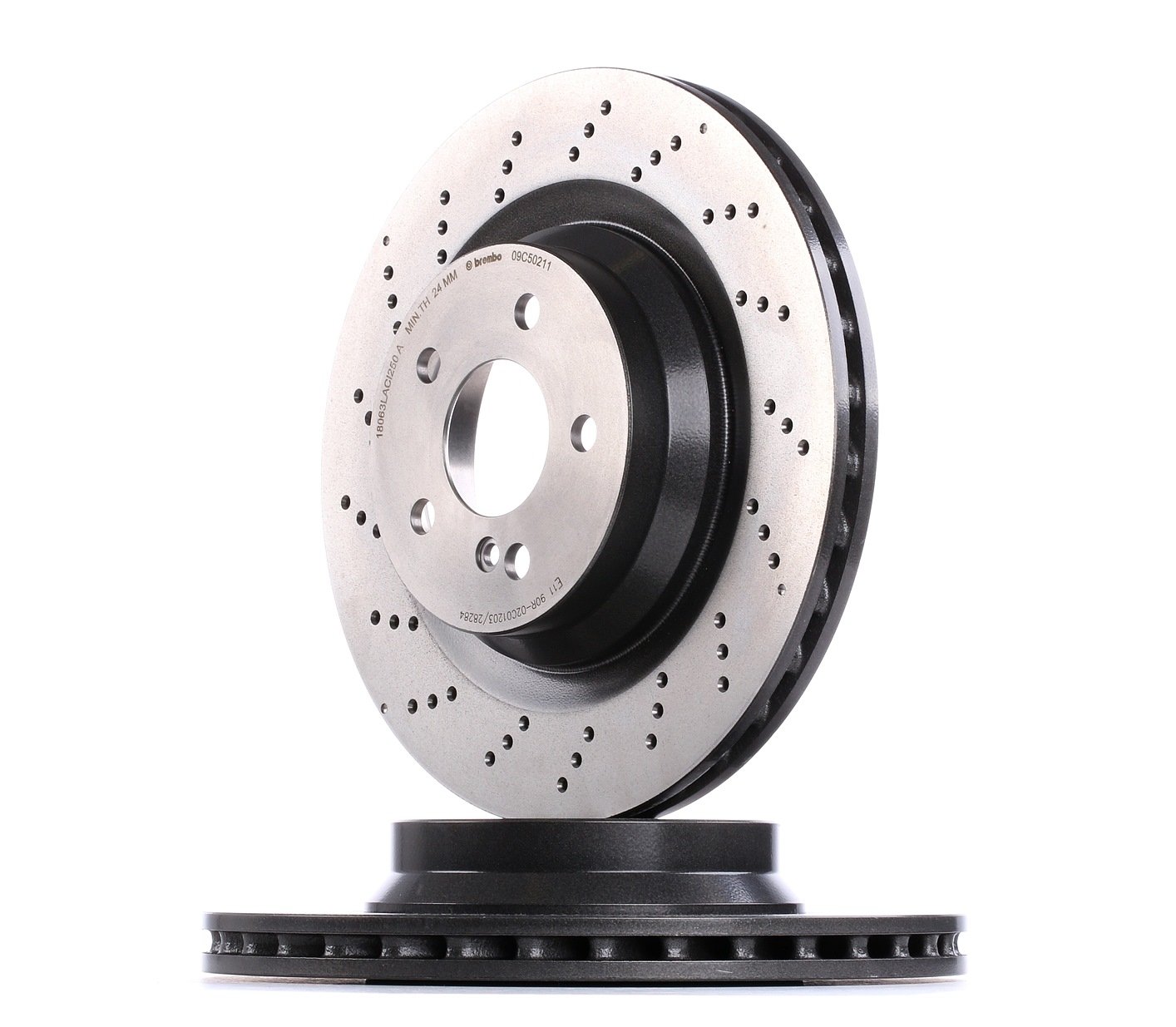
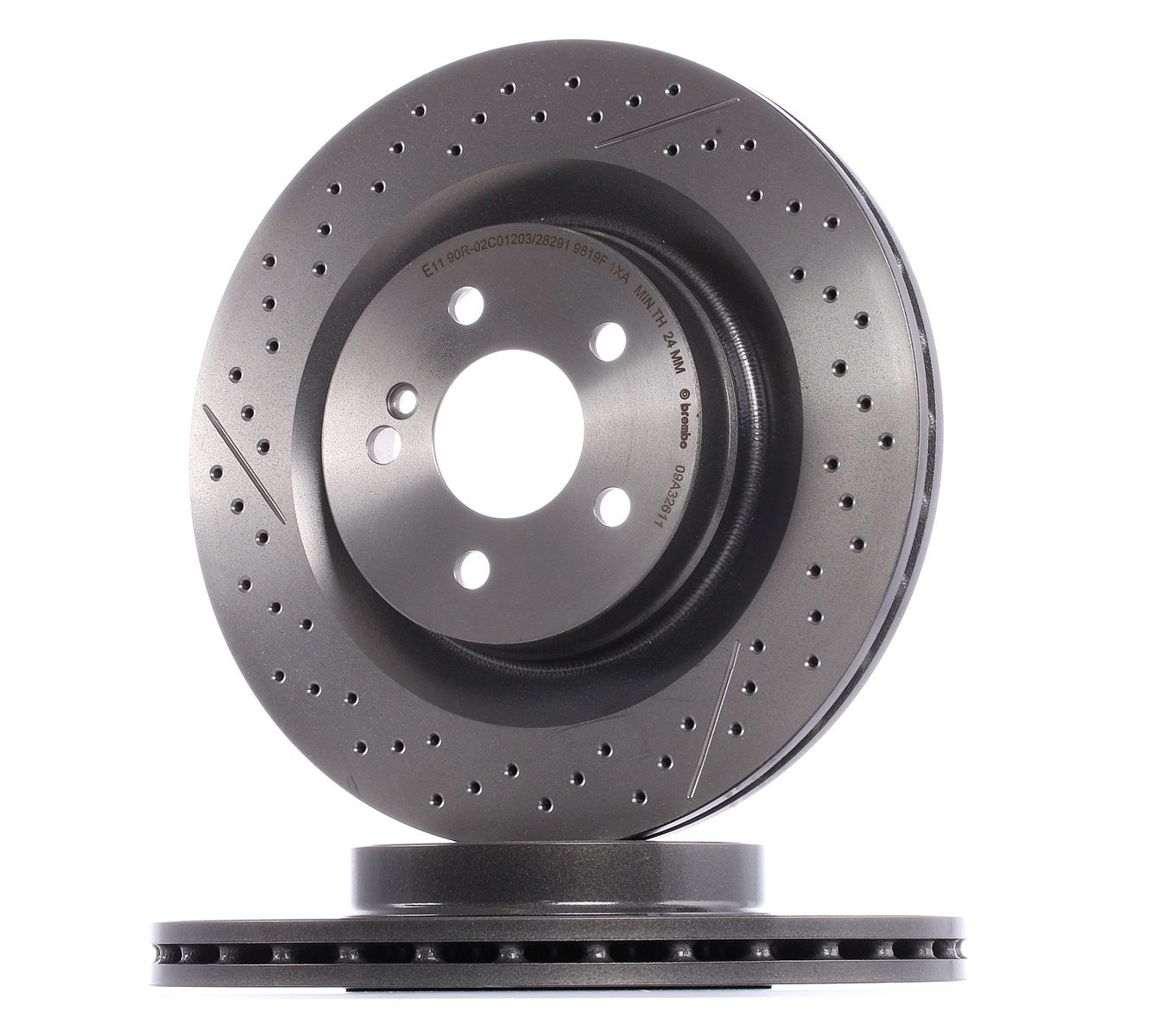
Instead of housing the parts of car brakes inside a metal drum, disc brakes work using a slim metal disc and calipers containing brake pads and pistons. When you engage the brakes, the main hydraulic cylinder pushes hydraulic fluid through the brake lines, actuating the pistons. The pistons press the friction pads against the rotating metal discs, creating friction and forcing the discs and wheels to slow down. Discs have become the standard in the car industry due to their efficiency and heat dissipation advantages. However, most manufacturers still use a combination of the two types – discs on the front axle and brake drums at the rear.
Comparison chart: drum brakes vs. disc brakes
Drum brakes
Disc brakes
Advantages
Low cost: Less expensive to produce, used on most vehicle types
Heat dissipation: Exposed components with large surface area prevent overheating
Low maintenance: High resistance to corrosion, requiring less frequent maintenance
All-weather performance: Efficient in wet conditions without grabbing or slipping
Less pressure required: "Self-energising" effect increases stopping power without additional effort
Easy installation: Fewer components, easier to disassemble and replace parts like brake pads
Durability: Longer lifespan due to larger friction surface contact area
Disadvantages
Overheating: Tend to overheat during heavy braking or high speeds, causing drum distortion and shoe glazing
Cost: Higher manufacturing costs compared to drum brakes
Grabbing: In older, poorly maintained systems, uneven gripping of brake shoes against the drum surface can occur.
Faster wear: Pads and discs provide more stopping power but tend to wear out much faster
Thermal expansion: The drum diameter can increase when hot, requiring the driver to press the pedal further
Warping: Discs can warp during high-speed braking due to extreme temperatures
Frequently asked questions about drum and disc brakes
What is the main difference between drum brakes and disc brakes?
Disc brakes use calipers to squeeze pads against a rotating disc attached to the wheel, while drum brakes have brake shoes that press outward against the inside of a drum. Disc brakes provide better heat dissipation and stopping power, whereas drum brakes are more cost-effective and potentially longer lasting in certain conditions.
Why do most modern cars have disc brakes in the front and drum brakes in the rear?
This combination balances performance and cost. Since 70–80% of braking occurs at the front wheels during deceleration, disc brakes are used there for superior stopping power. Drum brakes are sufficient for rear wheels where less braking force is needed, and they're more cost-effective while also functioning well as parking brakes.
How often should brake pads and shoes be replaced?
Brake pads typically need replacement every 30,000 to 70,000 miles, while brake shoes can last 40,000 to 150,000 miles depending on driving conditions. Have your brakes inspected annually or if you notice symptoms like squealing or reduced stopping power. AUTODOC mechanics recommend replacing disc brake pads when they're worn to about 3–4mm thickness and drum brake shoes when the friction material is less than 2mm.
Do electric vehicles use the same braking systems as conventional cars?
Electric vehicles use a hybrid system combining traditional friction brakes with regenerative braking. When braking, the electric motor works in reverse, converting kinetic energy into electrical energy to recharge the battery. This regenerative system handles much of the everyday braking, reducing wear on conventional components and extending their lifespan, though they still require periodic maintenance.
How much does it typically cost to replace disc brakes versus drum brakes?
Disc brake replacement typically costs £150 to £400 per axle, including new pads, rotors, and labour. Drum brake replacement usually runs £120 to £350 per axle for new shoes, hardware, and labour. While drum brakes often have a lower initial cost, disc brakes may offer better long-term value.
Both drum and disc brakes have their place in modern vehicles, with each offering distinct advantages. While disc brakes provide superior stopping power, heat dissipation, and performance in varied conditions, drum brakes remain cost-effective and durable for less demanding applications. Many modern vehicles strike an optimal balance with disc brakes at the front and drum brakes at the rear. When maintaining your vehicle, understanding these differences can help you make informed decisions about service intervals and potential upgrades. Regardless of which braking system your vehicle uses, regular inspection and maintenance are essential for your safety on the road. Ultimately, the better system for you depends on your specific vehicle requirements and driving habits.
Need to replace your brakes?
If you notice squealing or grinding sounds when braking or find it difficult to maintain control of the vehicle, it could be time to replace the braking components. Whether you’re looking for BMW brake discs or brake drum parts for your Renault, you can find braking system parts at very low prices online.
A useful video on this topic:
Ensure Your Safety: How to Inspect Your Brake System Effectively
AUTODOC Bestsellers: parts at a good price
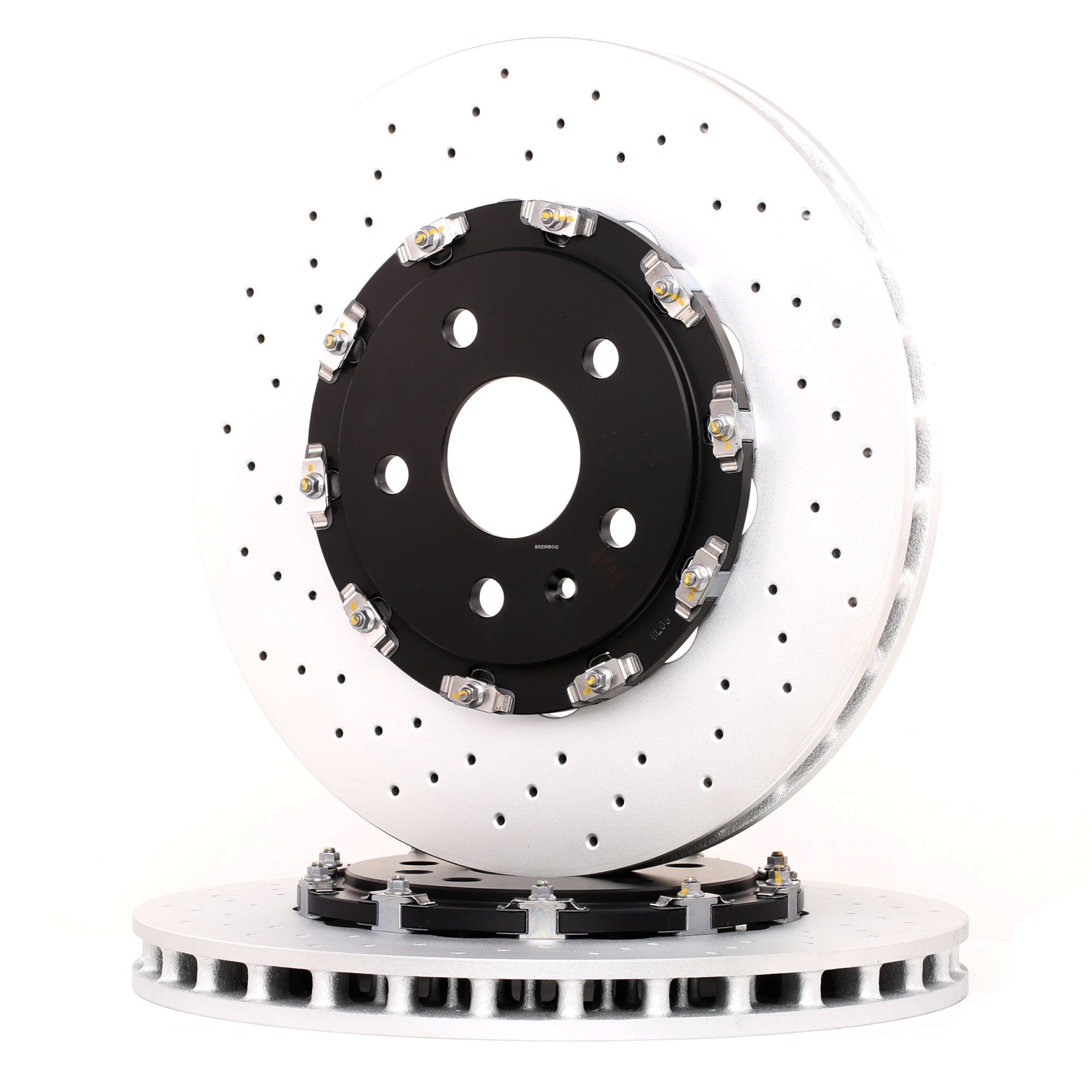
Reviews - 13
Parts Details
Diameter [mm]: 318
Brake Disc Type: Vented
Drilled:
no
Surface: Coated
Machining:
High-carbon
Supplementary Article / Supplementary Info Info 2: with bolts / screws
Alexandru’s passion for cars began at age 10 when he helped his father repaint a Golf 1. He was one of the very first technical experts in automotive parts selection at AUTODOC. He's able to tackle complex questions about optics, body parts, cooling, engines, and exhaust systems. When off duty, he studies mechanical engineering, repairs cars, and shares his experiences with other car enthusiasts.

 2 December 2025 (updated)